




 New Product Development
 Custom Chocolate Formulations
 Quality Assurance
 Turnkey Chocolate Manufacturing
 Production at Scale
 Private Label
 Bakery and Pastry Solutions
 Organic Chocolate
 Upcycled Cocoa Products














Refreshed and republished on May 14th, 2026. This post was originally published on June 25th, 2025, and has been enhanced and updated for accuracy and comprehensiveness.
Protein-enriched chocolate has evolved from a niche innovation into a key development area for brands across confectionery, snacks, and bakery categories. What once served mainly as a positioning claim has become a complex formulation challenge: delivering added nutritional value while maintaining the texture, flavour, and processing performance consumers expect.
What technical factors should product developers evaluate when choosing a protein-enriched chocolate for different applications?
Product developers must evaluate how protein-enriched chocolate performs within the final application, including texture, viscosity, flavour release, sweetness balance, and processing stability.
Factors such as protein source, fat-phase interactions, sugar level, water activity, and ingredient compatibility can significantly influence product behaviour across snacks, bakery, confectionery, and beverage applications
These effects become even more critical in high-protein or reduced-sugar formulations, where small adjustments can directly impact both sensory experience and manufacturing performance.
Protein now sits at the intersection of two accelerating consumer demands: functional wellbeing and indulgent experience.
3 in 5 consumers globally are actively increasing their protein intake, while demand for products that combine function with sensory experience continues to grow (Euromonitor, 2026; Innova Market Insights, 2025).
Today’s consumers expect functional indulgence — products that deliver nutritional benefits without sacrificing texture, creaminess, or flavour complexity. This creates a new level of formulation pressure, especially when protein is combined with additional requirements such as sugar reduction or clean-label positioning.
In practice, adding protein is never an isolated formulation decision. It requires rebalancing the entire system—from fat phase interactions and sweetness perception to flow behaviour and shelf-life stability.
What you’ll learn in this blog
- Why develop products with protein-enriched chocolate today?
- How does protein changes texture, flavour, and flow in chocolate systems?
- How do whey and plant proteins behave differently in your chocolate applications?
- How to balance added protein, sweetness, and texture in chocolate formulations?
- How does protein-enriched chocolate behave across snacks, bakery, and confectionery?
- Which ingredient combinations work best in protein-enriched chocolate systems?
- Why does protein-enriched chocolate behave differently at scale?
- What happens to product shelf life when using protein-enriched chocolate?
- Checklist: Key formulation considerations for protein-enriched chocolate products
Why develop products with protein-enriched chocolate today?
Across global markets, consumers are actively seeking products that deliver functional benefits without compromising sensory experience. Protein plays a central role in this expectation, particularly in snacks and on-the-go formats where satiety, convenience, and perceived health benefits are major purchase drivers.
According to Luker Chocolate’s 2026 Top Chocolate Consumer Trends Report, 3 in 5 consumers globally are actively increasing their protein intake, while demand for products that combine functionality with indulgence continues to grow (Euromonitor, 2026; Innova Market Insights, 2025).
At the same time, indulgence is evolving. Consumers increasingly expect better-for-you products to deliver rich texture, creaminess, and flavour complexity comparable to traditional confectionery experiences.
What does this mean for product development?
- Protein is no longer a niche positioning feature—it is becoming a baseline expectation in functional snacking
- Products must deliver on both technical performance and sensory perception.
- Combining protein with additional demands, such as sugar reduction or clean-label positioning, significantly increases formulation complexity.
|
Key takeaway The opportunity is not simply to add protein, but to design products that simultaneously satisfy evolving expectations around functionality, texture, indulgence, and processing performance. |
1. How does protein affect texture, flavour, and flow in protein-enriched chocolate?
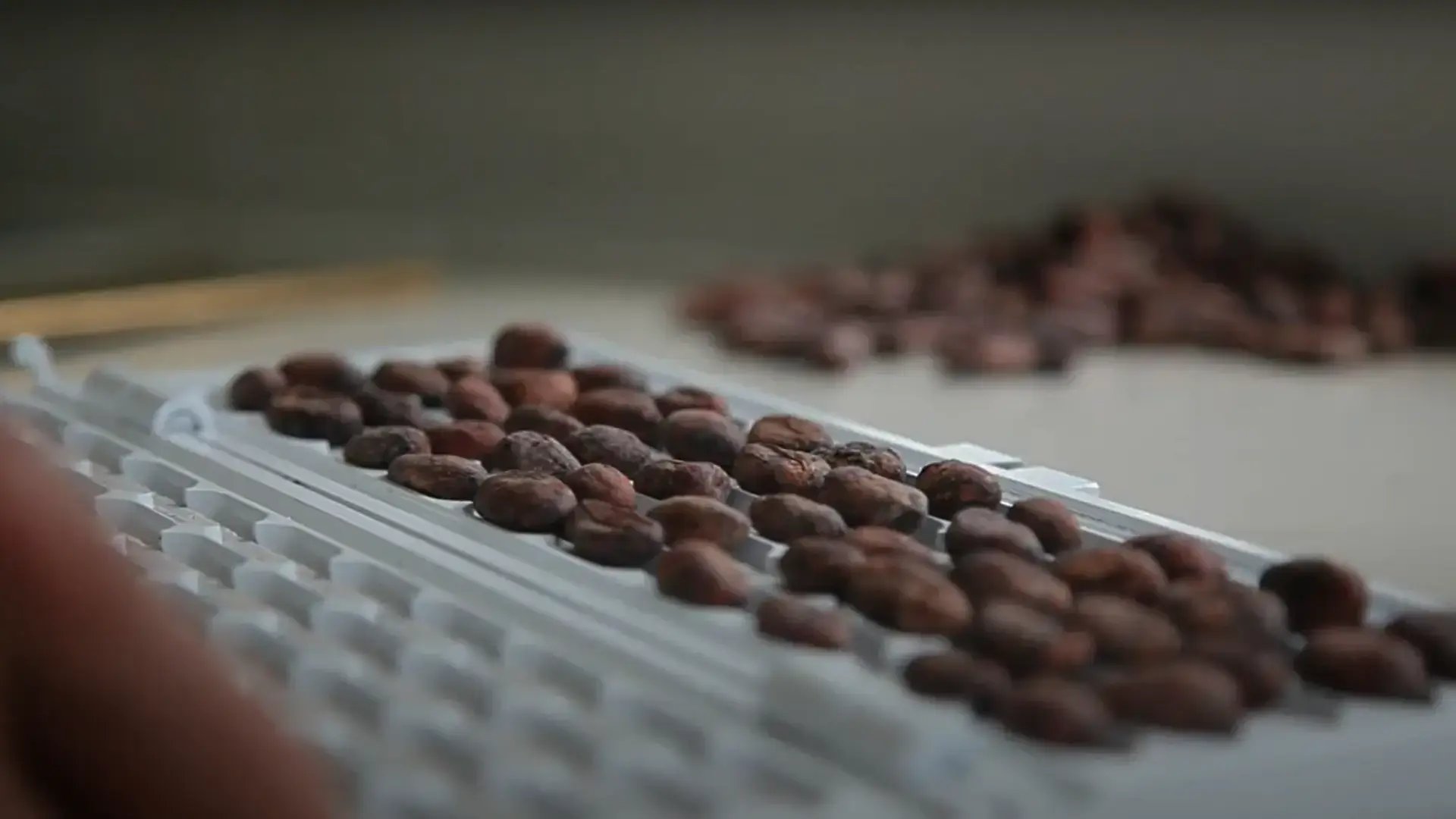
Adding protein to chocolate introduces structural and sensory changes that go beyond flavour. In protein-enriched chocolate systems, proteins interact with both the fat phase and other solids, influencing texture, viscosity, melt, and overall sensory perception.
Unlike sugar, which mainly contributes sweetness and bulk, protein affects how chocolate flows, behaves during processing, and performs across functional food applications.
These effects are interconnected. Changes in protein level can simultaneously impact mouthfeel, flavour release, flow behaviour, and product stability — making protein chocolate formulation a multi-variable balancing challenge for R&D teams.
Where does protein have the biggest impact in protein-enriched chocolate?
1. Structure and texture in protein chocolate
Protein particles behave differently from sugar during refining and dispersion. In protein-enriched chocolate, they interact more strongly with fat and moisture, which can lead to:
- Increased particle-to-particle interactions
- Denser or more compact structures
- Greater risk of graininess if dispersion is not properly optimised
👉 In practice:
- Poorly integrated protein → sandy or dry texture.
- Well-balanced formulation systems → smoother, more cohesive structure.
Note: For functional confectionery brands, achieving the right texture is critical to maintaining indulgent sensory appeal.
2. Fat phase interactions and mouthfeel
Proteins—especially dairy proteins such as whey—strongly influence the fat phase in chocolate systems, affecting creaminess, lubrication, and melt behaviour.
|
System change |
Effect on product |
|
Strong protein–fat interaction |
Improved creaminess and smoother melt |
|
Low-fat / high-protein chocolate |
Dry or chalky mouthfeel |
|
Balanced fat–protein ratio |
Better lubrication and sensory perception |
👉 Why it matters:
Fat plays a key role in masking astringency and carrying flavour. As protein levels increase, maintaining this balance becomes critical.
3. Viscosity and flow behaviour in protein-enriched chocolate
Protein significantly affects chocolate rheology and processability.
Higher protein levels generally increase viscosity through particle interactions and water-binding effects, directly influencing manufacturing performance.
Typical effects include:
- Higher resistance to flow
- Increased viscosity → thicker coatings, reduced fluidity
- Greater sensitivity to temperature and shear
👉 In applications:
- Chocolate coatings may become too thick
- Moulding may require reformulation of fat or emulsifiers
Note: For manufacturers developing protein chocolate couvertures, controlling flow behaviour is essential for consistent processing.
4. Flavour perception and release
Protein influences both flavour intensity and flavour release over time in protein chocolate systems.
Protein can:
- Bind flavour compounds → delayed or muted release
- Introduce off-notes (earthy, bitter, astringent)
- Interact with cocoa solids and sweeteners
👉 Typical flavour impacts:
- Whey protein → neutral to creamy sensory profile
- Plant proteins → more pronounced flavour impact
Note: Balancing flavour complexity while maintaining functional positioning is one of the main challenges in protein-enriched chocolate development.
5. Water activity and product stability
Even in low-moisture applications like chocolate, protein can influence water distribution and shelf-life stability.
Potential effects include:
- Increased water-binding capacity
- Changes in water activity (Aw)
- Potential impact on shelf life and fat migration
👉 Particularly relevant for:
- High-protein chocolate formulations
- Functional snack bars and inclusions
- Multi-component confectionery systems
What happens when sugar reduction is combined with protein-enriched chocolate?
Reducing sugar while adding protein compounds poses formulation challenges.
Sugar contributes bulk, sweetness, and flavour masking. Removing it exposes the intrinsic characteristics of the protein while also affecting its structure.
Combined formulation effects:
- Reduced masking of bitterness and astringency
- Reduced bulk → weaker structure
- Greater reliance on fat and formulation balance
👉 Implication for product developers:
Formulation shifts from ingredient replacement to system redesign.
|
Key takeaway Protein affects chocolate as a system, not a single attribute. It reshapes structure, flow, flavour perception, and stability simultaneously, making balance across these variables essential for successful product development. |
2. How do whey and plant proteins behave differently in protein-enriched chocolate applications?
Protein selection influences far more than nutritional positioning in protein-enriched chocolate. The type of protein used directly affects flavour perception, texture, rheology, mouthfeel, and overall processing performance across different chocolate applications.
Whey and plant-based proteins each offer distinct formulation advantages, but they also behave differently depending on the product matrix, sugar level, fat system, and manufacturing conditions.
The key question is not which protein source is “better,” but which one best supports the sensory experience and technical performance required for the final product.
1. Whey protein in chocolate applications
Creamier systems with smoother flavour integration
Whey proteins integrate efficiently into dairy-based chocolate systems due to their relatively neutral flavour profile and compatibility with fat phases. In protein-enriched chocolate formulations, whey proteins typically support:
- Smoother mouthfeel
- Cleaner melt behaviour
- More balanced flavour release
- Improved creaminess perception
This makes whey protein particularly effective in functional chocolate applications where indulgence and texture (such as creaminess) remain critical to consumer acceptance.
Best suited for
- Milk chocolate systems
- Enrobed snacks
- Protein bars and inclusions
- No-added-sugar chocolate formulations
- Creamier or highly indulgent flavour profiles
What tends to work well
- Dairy-based systems
- Nut inclusions (hazelnut, almond, peanut)
- Moderate-to-high cocoa intensity
- Balanced sweetener systems
What to watch
- Higher whey protein levels can still increase chocolate viscosity
- Aggressive sugar reduction may require additional flavour balancing
- High-fibre systems can generate density and flow challenges
2. Plant-based proteins in chocolate applications
Flavour-forward systems with stronger positioning opportunities.
Plant-based proteins play a central role in vegan and dairy-free chocolate development, while also responding to growing consumer demand for diversified protein sources.
However, plant proteins generally introduce stronger flavour and textural changes into protein chocolate systems. Depending on the protein source, they may contribute:
- Earthy flavour notes
- Bitterness or astringency
- Increased dryness
- Higher viscosity
These effects become even more noticeable in reduced-sugar or high-protein chocolate formulations if the system is not carefully balanced.
Best suited for
- Vegan chocolate products
- Dairy-free chocolate applications
- Dark chocolate systems
- Flavour-forward formulations
- Products with inclusions or flavour masking opportunities
What tends to work well
- Higher cocoa percentages
- Nut, coffee, toasted, or spice flavour profiles
- Systems with sufficient fat balance
- Applications where stronger flavour profiles are expected
What to watch
- Increased bitterness and astringency in low-sugar systems
- Higher water-binding capacity that impacts viscosity and texture
- Greater need for flavour masking and fat-phase balancing
Key takeaway
Whey and plant-based proteins create very different outcomes in protein-enriched chocolate applications. Whey proteins generally support creamier textures and smoother flavour integration, while plant proteins enable stronger vegan positioning and more flavour-forward concepts.
For product developers, success depends on balancing protein source, cocoa intensity, sweetness system, fat content, and processing conditions to achieve both functional performance and indulgent sensory appeal.
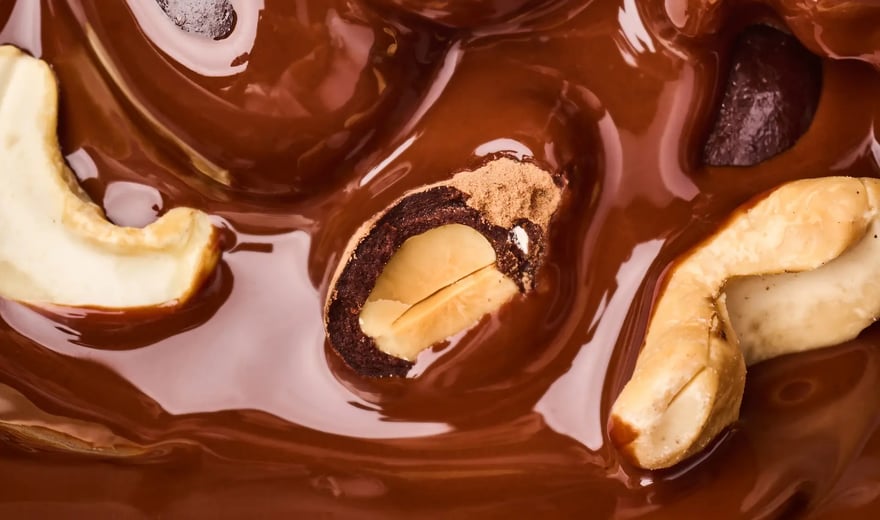
3. How does flavour compatibility change by protein source in protein-enriched chocolate?
Flavour compatibility is one of the most important variables in protein-enriched chocolate development. Different protein sources interact with cocoa, sweeteners, fat systems, and inclusions in unique ways, directly influencing flavour perception, mouthfeel, and overall sensory balance.
Selecting the right flavour combinations can help product developers improve flavour integration, reduce off-notes, and maintain indulgent sensory appeal across functional chocolate applications.
|
Ingredient pairing |
Why it works |
|
Whey protein + milk chocolate |
Enhances creaminess and smooth flavour release |
|
Whey protein + nut inclusions |
Reinforces indulgent perception and helps mask protein notes |
|
Plant protein + dark chocolate |
Cocoa intensity helps balance earthy notes |
|
Plant protein + coffee or spices |
Strong aromatic systems improve flavour integration |
|
High protein + low-fat systems |
Higher risk of dry or chalky mouthfeel |
|
Plant protein + low-sugar chocolate |
Reduced sweetness exposes bitterness and astringency |
Why flavour compatibility matters in protein chocolate applications
In protein-enriched chocolate systems, flavour balance depends on more than sweetness alone. Protein source, cocoa intensity, fat content, and sugar level all influence how flavour compounds are released and perceived over time.
For example:
- Whey proteins generally support creamier and smoother flavour profiles
- Plant proteins often require stronger flavour systems or masking strategies
- Higher cocoa percentages can help balance earthy or bitter protein notes
- Nut, coffee, spice, and toasted flavour profiles typically integrate more effectively with plant proteins
For R&D teams developing functional chocolate products, understanding these interactions is essential to achieving both nutritional positioning and consumer acceptance.
4. What changes in no-added-sugar protein-enriched chocolate formulations?
When sugar reduction is combined with protein enrichment, flavour balancing becomes more complex.
Sugar contributes not only sweetness, but also bulk and flavour masking. As sugar levels decrease, the intrinsic characteristics of the protein become more exposed — particularly in plant-based chocolate formulations.
Implications for formulation
- Greater perception of bitterness or astringency
- Increased need for fat-phase optimisation
- Higer reliance on flavour pairings and sweetener systems
- Greater sensitivity to texture defects and processing challenges
👉 These effects are especially important in high-protein chocolate applications, where viscosity, mouthfeel, and flavour release are already being modified by the protein system itself.
Why whey proteins often perform well in no-added-sugar chocolate
In many no-added-sugar chocolate applications, whey proteins provide a smoother sensory transition due to their creamier flavour profile and stronger compatibility with dairy-based chocolate matrices.
This can help product developers maintain indulgent sensory characteristics while reducing the perception of bitterness, dryness, or astringency often associated with high-protein and reduced-sugar systems.
5. Why does protein selection matter for product development?
Consumers are increasingly looking for products that combine functionality with indulgence, particularly in snack and on-the-go-formats.
According to Innova Market Insights (2025), demand continues to grow for functional snack products that deliver both nutritional value and multisensory experiences, with texture, creaminess, and flavour complexity becoming increasingly important purchase drivers.
For product developers, this raises the challenge far beyond simply adding protein to chocolate systems.
In protein-enriched chocolate applications, products must simultaneously maintain:
- Indulgent texture and mouthfeel
- Balanced flavour complexity
- Stable processing performance
- Nutritional positioning and functionality
This becomes even more critical in reduced-sugar, high-protein, or plant-based chocolate formulations, where small formulation changes can significantly affect rheology, flavour release, and sensory perception.
Why this matters in functional chocolate development
As consumer expectations evolve, protein-enriched chocolate products are expected to deliver:
- Functional wellbeing benefits
- Premium sensory experience
- Clean-label or reduced-sugar positioning
- Consistent manufacturing performance
This means formulation decisions can no longer focus exclusively on nutritional claims. Protein source, fat balance, cocoa intensity, sweetener systems, and texture optimisation must all work together within the final chocolate application.
|
Key takeaway In protein-enriched chocolate development, protein selection should be guided by the final product experience — not only by nutritional targets or marketing claims. The most successful functional chocolate systems are those where flavour profile, texture, processability, and positioning strategy are fully aligned to deliver both technical performance and indulgent consumer appeal. |
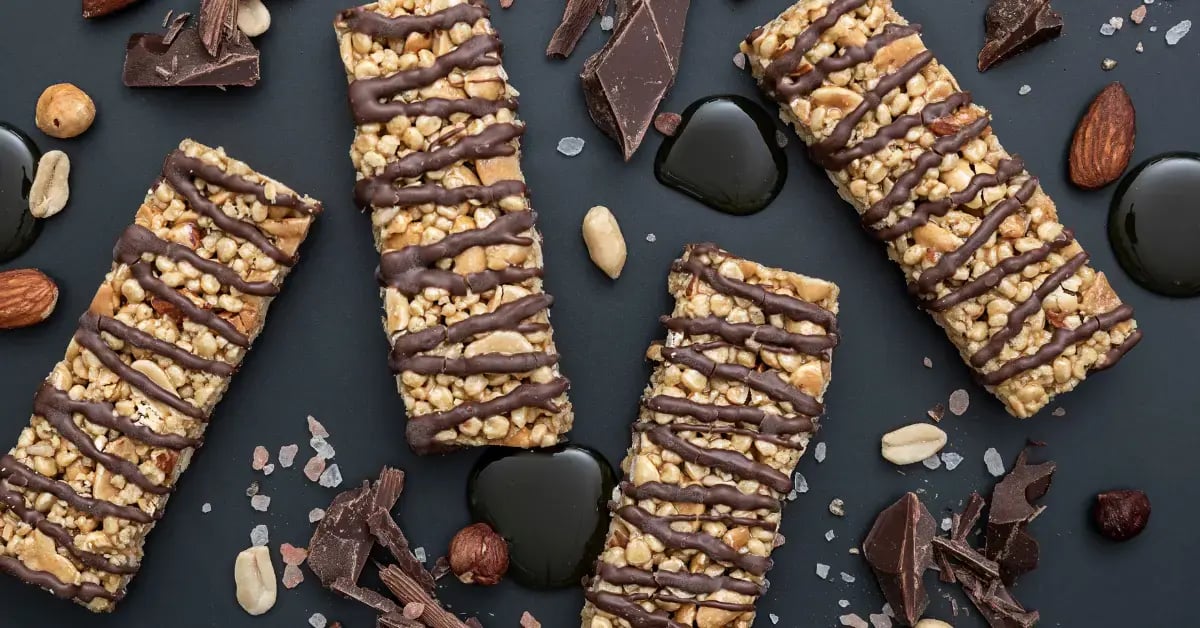
3. How to balance added protein, sweetness, and texture in chocolate formulations?
Successful protein-enriched chocolate formulations are rarely built around a single ingredient. Product performance depends on how proteins, fats, sweeteners, fibres, and cocoa solids interact as a system.
As protein levels increase—or sugar levels decrease— even small formulation adjustments can significantly affect texture, viscosity, flavour release, and shelf-life stability. For product developers, the challenge goes beyond achieving nutritional targets. The goal is to preserve the indulgent sensory experience and processing performance consumers expect from chocolate products.
Start with the role sugar plays in the chocolate system
In chocolate and functional snack applications, sugar contributes far more than sweetness alone. It also plays a major role in:
- Bulk and structure
- Texture and particle spacing
- Flavour masking
- Flow behaviour and rheology
- Shelf-life stability
When protein is added while sugar is reduced, these functionalities must be rebuilt through ingredient selection, fat optimisation, sweetener systems, and process adjustments.
What typically changes in high-protein chocolate systems?
|
Formulation shift |
Typical impact |
|
Higher protein inclusion |
Increased viscosity and product density |
|
Reduced sugar |
Less flavour masking and weaker structure |
|
Lower fat levels |
Drier mouthfeel and reduced lubrication |
|
Added fibres |
Higher water binding and thicker systems |
|
High-intensity sweeteners |
Potential aftertaste or sweetness mismatch |
Balancing the fat–to-protein relationship in chocolate formulations
One of the most critical formulation variables in protein-enriched chocolate is the fat-to-protein balance.
Protein increases particle interactions and changes lubrication within the chocolate matrix. If fat levels are not properly adjusted, common sensory and processing defects may appear, including:
- Dry or chalky mouthfeel
- Excessive viscosity
- Poor melt behaviour
- Reduced flavour release
What typically helps improve balance
- Optimising cocoa butter or fat levels
- Using emulsifiers strategically
- Pairing proteins with smoother flavour systems
- Maintaining sufficient lubrication in reduced-sugar chocolate formulations
👉 In whey-based systems, stronger compatibility with dairy and fat phases can help maintain creamier sensory profiles and smoother melt characteristics.
Managing sweetness beyond sweetness intensity
In protein-enriched chocolate products — especially no-added-sugar or low-sugar formulations — sweetness management becomes more complex.
The challenge is not only achieving the desired sweetness level, but also maintaining:
- Balanced sweetness onset
- Rounded flavour perception
- Minimal lingering aftertaste
Common formulation strategies
- Combining bulk sweeteners and high-intensity sweeteners
- Using cocoa intensity to support flavour balance
- Pairing proteins with nut, toasted, or coffee flavour profiles
- Adjusting sweetness curves depending on the final application
Note: These strategies become increasingly important in plant-based and high-protein chocolate systems, where bitterness or astringency may be more noticeable.
Why does texture become more sensitive in high-protein chocolate?
As protein content rises, texture defects become more pronounced in chocolate applications.
Typical texture challenges
- Graininess caused from poor protein dispersion
- Dense or compact structures
- Dryness in low-fat systems
- Thick or unstable chocolate coatings
Key formulation variables affecting texture and flow behaviour
|
Variable |
Why it matters |
|
Particle size distribution |
Influences smoothness and mouthfeel |
|
Protein dispersibility |
Affects texture uniformity |
|
Emulsification |
Supports flow behaviour and lubrication |
|
Fat-phase balance |
Controls melt and creaminess |
Why application testing matters in protein-enriched chocolate development
A protein-enriched chocolate system that performs well in a moulded chocolate bar may behave very differently in:
- Enrobed snacks
- Cereal bars
- Bakery inclusions
- Filled chocolate products
Each application introduces different:
- Moisture conditions
- Processing stresses
- Texture expectations
- Shelf-life requirements
👉 This makes early-stage application testing essential for successful functional chocolate development.
|
Key takeaway Protein-enriched chocolate formulation is not simply about compensating for a single ingredient change. It requires rebuilding sweetness, texture, rheology, flow behaviour, and sensory balance together, while considering the final application from the very beginning of product development. |
+
4. How does protein-enriched chocolate behave across snacks, bakery, and confectionery?
Protein-enriched chocolate does not behave the same way across applications. A formulation that performs well in a moulded chocolate bar may create texture, flow, or stability challenges in coatings, bakery products, or snack systems.
Each product format introduces different technical constraints—from moisture migration and processing temperatures to binding performances, shelf life, and sensory expectations. Understanding these variables early in development helps reduce reformulation cycles and improves scalability in functional chocolate applications.
🍫 Protein-enriched chocolate in confectionery & enrobed products
Delivering smooth coatings, clean melt, and indulgent texture
In confectionery coatings and enrobed snacks, flow behaviour, melt profile, and mouthfeel become critical formulation variables. Protein increases chocolate viscosity and can affect coating thickness, snap, and sensory perception if the fat phase is not properly balanced.
What product developers need to optimise
- Smooth coating flow
- Consistent thickness and coverage
- Clean melt with no chalkiness or cooling effect
- Stable texture throughout shelf life
What tends to work well
- Whey protein systems in milk chocolate formulations
- Balanced fat-to-protein ratios
- Nut inclusions that reinforce indulgent perception
- Moderate cocoa intensity for flavour balance
What to watch
- Thick or unstable coatings at high protein levels
- Graininess caused by poor protein dispersion
- Excess viscosity in reduced-sugar chocolate systems
- Flavour imbalance when sweetness reduction is too aggressive
👉 In enrobed snack applications, even small changes in viscosity can significantly impact coating performance and production efficiency.
🍪 Bakery & pastries
Managing moisture, texture, and flavour stability
Protein behaves differently in bakery systems due to moisture migration and thermal processing. In filled or coated bakery products, maintaining texture stability over shelf life becomes a major formulation challenge.
What product developers need to optimise
- Moisture balance across components
- Softness and texture stability
- Flavour consistency after baking or storage
- Structural integrity in layered products
What tends to work well
- Whey proteins in creamier or dairy-forward systems
- Cocoa profiles combined with toasted or nut inclusions
- Controlled fibre levels to support softness
- Moderate sweetness systems for flavour balance
What to watch
- Dry or dense textures in high-protein and low-fat systems
- Water migration between fillings and chocolate coatings
- Increased hardness throughout shelf life
- Flavour shifts in plant-based chocolate systems over time
👉 In bakery applications, protein formulation challenges are often driven more by moisture management than by sweetness alone.
🍫🥜 Protein-enriched chocolate in Snack bars, Trail mixes & Inclusions
Balancing binding, crunch, and indulgence
Snack applications combine functional positioning with strong sensory expectations. Consumers increasingly expect high-protein snack products to remain indulgent, textured, and convenient.
According to Innova Market Insights (2025), texture plays an increasingly important role in perceptions of indulgence, particularly in snack categories where crunch, creaminess, and texture contrast influence product appeal.
This creates additional complexity in multi-component systems where chocolate coatings, inclusions, binders, and fillings interact over time.
What product developers need top optimise
- Strong binding and product cohesion
- Texture consistency throughout shelf life
- Controlled moisture migration
- Balanced sweetness and flavour release
What tends to work well
- Whey protein systems paired with nuts or crispy inclusions
- Layered textures that reinforce indulgence
- Cocoa intensity that supports flavour depth
- Balanced sweetener systems in reduced-sugar snack products
What to watch
- Crumbling caused by weak binding systems
- Hardening over shelf life
- Dry mouthfeel in high-protein snack formats
- Flavour fatigue in highly sweetened systems
👉 In snack systems, protein influences not only nutritional positioning, but also the way texture evolves over time.
☕ Protein-enriched chocolate in Beverage & Drinking chocolate applications
Maintaining dispersion and rounded flavour perception
In beverage systems, sensory expectations shift from structure toward smoothness, creaminess, and drinkability. Protein affects dispersion, mouthfeel, and flavour release — especially in reduced-sugar chocolate beverages.
What product developers need to optimise
- Smooth dispersion with minimal sedimentation
- Rounded sweetness profile
- Sufficient body and creaminess
- Stable flavour perception over time
What tends to work well
- Whey proteins in dairy-based beverage systems
- Moderate cocoa intensity for flavour balance
- Carefully calibrated sweetener blends
- Light fat systems that maintain mouthfeel
What to watch
- Sedimentation caused by poor protein dispersion
- Thin or watery perception in low-solids systems
- Lingering aftertaste from high-intensity sweeteners
- Texture instability during thermal processing
👉 Beverage applications rely heavily on flavour release and mouthfeel consistency, making sweetness calibration especially important in protein-enriched chocolate systems.
Cross-application formulation considerations in protein-enriched chocolate
Across functional chocolate applications, several formulation variables consistently influence technical performance and sensory quality:
|
Variable |
Why it matters |
|
Fat-phase balance |
Controls lubrication, melt, and flavour release |
|
Protein dispersibility |
Influences texture uniformity and flow behviour |
|
Water activity (Aw) |
Impacts stability and shelf life |
|
Sweetness system |
Affects flavour masking and aftertaste |
|
Processing conditions |
Influence viscosity, stability, and texture |
|
Key takeaway Protein performance in chocolate is highly application-dependent. Successful protein-enriched chocolate formulations are built around the physical, sensory, and processing realities of the final application — not only around nutritional targets or protein claims. |
5. Which ingredient combinations works best in protein-enriched chocolate systems?
In protein-enriched chocolate systems, ingredient performance depends not only on nutritional composition but also on how ingredients interact with fat phases, flavour compounds, sweeteners, and moisture.
Some ingredient combinations naturally reinforce creaminess, flavour balance, and indulgent sensory perception, while others can amplify bitterness, dryness, viscosity, or processing instability.
For product developers working on functional chocolate applications, understanding these interactions early helps reduce reformulation cycles and improve performance across snacks, bakery, confectionery, and beverage systems.
1. Why ingredient compatibility matters in protein-enriched chocolate
Proteins directly influence flavour release, particle interactions, mouthfeel, and chocolate rheology. At the same time, sugar reduction, fibre addition, or fat adjustments can expose flavour defects or destabilise texture.
In practice, formulation challenges rarely come from a single ingredient alone. Most issues emerge from the way ingredients behave together within the chocolate matrix.
Ingredient combinatios that tend to work well
- Whey protein + milk chocolate systems
- Whey protein + nut inclusions
- Plant proteins + higher cocoa intensity
- Whey protein + reduced sugar dairy systems
- Plant proteins + coffee, spice, or toasted flavour profiles
- Cocoa-forward systems with balanced sweetness curves
Ingredient combinations that require careful balancing
- Protein + high-intensity sweeteners
- Protein + fibre systems
- Plant protein + low-sugar chocolate systems
- High-protein + low-fat chocolate formulations
- Multi-component systems with moisture migration risks
2. Whey protein and milk chocolate systems
🥛 Why this combination works well
Whey proteins integrate efficiently into dairy-based chocolate matrices due to their relatively neutral flavour profile and compatibility with fat phases.
In protein-enriched chocolate applications, this combination tends to:
- Enhance creaminess perception
- Improve flavour roundness
- Support smoother melt and lubrication
Best suited for
- Enrobed snacks
- Protein bars
- Chocolate cups
- Creamier flavour profiles
👉 Food science insight: Fat plays a critical role in masking astringency and supporting flavour release. Whey proteins interact smoothly with dairy fat systems, helping preserve indulgent sensory characteristics in functional chocolate products.
3. Whey protein and nut inclusions
Why this combination works well
Nut profiles such as hazelnut, almond, and peanut naturally reinforce roasted, creamy, and indulgent flavour notes.
These pairings can help:
- Reduce protein perception
- Increase flavour complexity
- Improve perceived richness in reduced-sugar chocolate systems
Best suited for
- Snack bars
- Trail mixes
- Layered chocolate textures
- No-added-sugar applications
4. Plant proteins and higher cocoa intensity
🍫Why this combination works well
Higher cocoa intensity can help balance earthy or beany notes commonly associated with plant proteins.
More robust flavour systems also improve integration with:
- Coffee flavours
- Toasted grains
- Spices
- Nut inclusions
Best suited for
- Dark chocolate systems
- Vegan chocolate applications
- Flavour-forward product concepts
👉 Important nuance: Plant proteins often require more flavour balancing, but they create strong opportunities in products where bold flavour profiles and plant-based positioning are central to the concept.
3. Ingredient combinations that require careful balancing
⚖️ Protein and high-intensity sweeteners
Common challenge
As sugar levels decrease, protein notes become more exposed. High-intensity sweeteners may compensate for sweetness intensity, but not for bulk or flavour masking.
This may result in:
- Lingering sweetness
- Metallic or sharp aftertaste
- Increased bitterness or astringency
What typically helps
- Combining bulk and high-intensity sweeteners
- Using cocoa intensity strategically
- Incorporating roasted or creamy flavour systems
🌾 Protein and fibre systems
Common challenge
Fibres can strengthen nutritional positioning and improve body, but they also increase water binding and overall system density.
Potential effects include:
- Higher viscosity
- Reduced flowability
- Dense or compact textures
- Faster thickening during processing
Particularly relevant in
- Protein snack bars
- Reduced-sugar chocolate systems
- High-protein applications
👉 Food science insight: Both proteins and fibres interact strongly with water and dispersed particles, increasing structural resistance and altering flow behaviour.
4. Combinations that can become more challenging
🌱 Plant protein and low-sugar chocolate systems
Why does this become difficult
Sugar contributes sweetness, bulk, and flavour masking. When sugar is reduced, the intrinsic flavour profile of plant proteins becomes more noticeable.
This may amplify:
- Earthy notes
- Astringency
- Bitterness
- Dry mouthfeel
What typically helps
- Higher cocoa intensity
- Nut or coffee flavour systems
- Additional fat balancing
- More rounded sweetener systems
🔗High protein and low fat systems
Common challenge
Reducing fat while increasing protein often disrupts lubrication and melt behaviour within protein-enriched chocolate formulations.
This can create:
- Chalky texture
- Poor melt
- Reduced flavour release
- Dense sensory perception
👉 In many applications, maintaining sufficient fat phase balance is essential to preserve indulgence perception.
5. How flavour release changes in protein-enriched chocolate systems
Protein affects not only flavour intensity, but also how flavour develops and is perceived over time.
|
System change |
Sensory impact |
|
Higher protein levels |
Slower flavour release |
|
Lower sugar levels |
Reduced flavour masking |
|
Lower fat content |
Less lubrication and flavour carry |
|
Increased cocoa intensity |
Better masking of protein notes |
|
Nut inclusions |
Enhanced richness and flavour complexity |
|
Key takeaway Ingredient performance in protein-enriched chocolate depends on system compatibility rather than isolated functionality. The most successful functional chocolate formulations are those where proteins, fats, sweeteners, cocoa profiles, and flavour systems reinforce each other instead of competing within the chocolate matrix. |
6. Why does protein-enriched chocolate behave differently at scale?
Protein-enriched chocolate formulations that perform well at bench scale may behave very differently during industrial production. Small adjustments in protein level, sweetener systems, fat balance, or fibre content can significantly affect chocolate rheology, flow behaviour, stability, and processing consistency at scale.
For product developers and manufacturers, this means formulation and processing conditions must be developed together from the beginning — especially in high-protein and reduced-sugar chocolate applications.
Where processing is most affected in protein-enriched chocolate systems:
1. Flow behaviour and coating performance
Protein increases chocolate viscosity and changes how the system flows during maniufacturing processes such as:
- Enrobing
- Moulding
- Depositing
- Pumping
These rheological changes can lead to:
- Thicker chocolate coatings
- Inconsistent product coverage
- Reduced fluidity during production
👉 High-protein chocolate and no-added-sugar formulations are particularly sensitive to these effects because both protein and sugar reduction directly influence particle interactions and flow resistance.
Why it matters for manufacturers
In enrobed snack and confectionery applications, even small viscosity changes can impact:
- Coating uniformity
- Production speed
- Processing efficiency
- Final product texture
2. Fat balance and emulsification in protein-enriched chocolate
As protein content rises, maintaining proper lubrication within the chocolate matrix becomes more critical.
Typical formulation adjustments include
- Rebalancing cocoa butter or fat level
- Optimising emulsifier systems
- Adjusting refining and conching parameters
Without these adjustments, products may develop:
- Dry or compact textures
- Poor melt behaviour
- Excessive thickening during processing
3. Temperature sensitivity during chocolate processing
Protein-enriched chocolate systems are generally more sensitive to thermal fluctuations during production.
This can affect:
- Tempering behaviour
- Flow consistency
- Texture stability over time
👉 Plant-based chocolate systems and high-fibre formulations often require tighter temperature control because they tend to show greater viscosity sensitivity during processing.
Why thermal control matters
Temperature fluctuations can alter:
- Fat crystallisation behaviour
- Coating consistency
- Product texture
- Sensory perception over time
For functional chocolate manufacturers, maintaining stable processing conditions becomes essential for achieving consistent product quality at scale.
4. Scale-up variability in high-protein chocolate systems
Small formulation changes that appear manageable at lab scale can become amplified during industrial production.
Processing variables such as:
- Shear
- Mixing intensity
- Residence time
- Cooling conditions
can significantly influence:
- Texture
- Flow behaviour
- Flavour perception
- Product stability
What helps improve scale-up performance?
Best practices for protein-enriched chocolate manufacturing
- Early pilot-scale validation
- Continuous viscosity monitoring throughout production
- Testing formulations under real manufacturing conditions
- Evaluating texture and stability throughout shelf life
- Adjusting processing parameters alongside formulation changes
These steps help reduce reformulation cycles and improve consistency across large-scale chocolate production.
|
Key takeaway Successful protein-enriched chocolate systems are designed for manufacturability as much as for nutrition or flavour. Aligning formulation and processing early helps reduce instability, improve consistency, and accelerate scale-up. |
7. What happens to product shelf life when using protein-enriched chocolate?
Protein-enriched chocolate systems can evolve significantly over shelf life. Changes in texture, flavour, and fat stability become more pronounced as protein levels increase or when formulations combine additional variables such as reduced sugar or high fibre content.
For product developers, stability is not only about shelf life duration, but about maintaining the intended sensory experience over time.
Where stability challenges typically appear
1. Fat bloom and structural instability
Proteins can interact with cocoa butter and dispersed particles, influencing crystallisation behaviour and fat migration.
This may increase the risk of:
- Fat bloom
- Surface instability
- Texture inconsistency over time
👉 Particularly relevant in:
- High-protein formulations
- Multi-component systems
- Products exposed to temperature fluctuations
2. Water activity and moisture migration
Although chocolate is a low-moisture system, proteins and fibres can influence water distribution and binding capacity.
Potential effects
- Texture softening or hardening
- Moisture migration between components
- Increased microbial risk in filled systems
- Reduced coating stability
👉 Especially important in:
- Snack bars
- Filled products
- Bakery applications
3. Flavour drift over time
Protein systems may evolve sensorially during storage.
Common changes
- Increased bitterness or astringency
- Reduced flavour clarity
- Oxidative flavour notes
- Sweetness imbalance over time
Plant-based proteins are generally more sensitive to flavour drift due to their stronger intrinsic flavour profile.
Packaging considerations
Packaging plays an important role in preserving texture and flavour stability in protein-enriched products.
Key factors to control
- Moisture exposure
- Oxygen exposure
- Light exposure
- Temperature variability during distribution
👉 In reduced sugar or high-protein systems, small environmental changes can have a greater impact on sensory performance.
5 Stability evaluation strategies for protein-enriched chocolate applications
|
Strategy |
Why it matters |
|
Accelerated shelf-life testing |
Helps predict texture evolution, fat migration, flavour drift, and viscosity changes under stressed storage conditions |
|
Monitoring water activity (Aw) |
Critical for controlling moisture migration, microbial stability, and texture consistency in multi-component systems |
|
Optimising fat phase balance |
Improves crystallisation stability and reduces the risk of fat bloom, structural softening, or sensory deterioration |
|
Evaluating packaging systems |
Limits oxygen, moisture, and light exposure that may accelerate oxidation, flavour degradation, or texture instability |
|
Testing under real storage conditions |
Validates how temperature fluctuations and distribution environments affect flavour release, texture, and structural integrity over time |
|
Key takeaway Shelf-life stability in protein-enriched chocolate depends on how well proteins, fats, moisture, and flavour systems remain balanced over time. Stability testing should evaluate not only safety, but also the evolution of texture, flavour, and sensory quality throughout the product’s life cycle. |
Checklist: Key formulation considerations for protein-enriched chocolate products
Protein-enriched chocolate checklist for product developers
|
Consideration |
Why it matters |
|
Define the final product experience first |
Texture expectations determine the required balance between viscosity, fat-phase lubrication, sweetness perception, and structural stability |
|
Choose the protein system based on the application |
Protein source affects flow behaviour, flavour release, water binding, and texture evolution differently across coatings, bakery, snacks, and beverages |
|
Balance protein with sufficient fat phase support |
Inadequate fat-phase balance can increase particle friction, reduce lubrication, and create dry or chalky mouthfeel |
|
Evaluate flavour compatibility early |
Protein type interacts differently with cocoa solids, sweeteners, and flavour systems, influencing bitterness, astringency, and flavour persistence |
|
Design sweetness systems beyond sweetness intensity |
Reduced sugar systems require compensation for flavour masking, bulk contribution, and temporal sweetness profile |
|
Assess viscosity and flow under real processing conditions |
Higher protein levels can alter yield stress, coating thickness, pumpability, and depositor performance during scale-up |
|
Monitor water activity and moisture migration |
Protein and fibre systems can modify water distribution, affecting microbial stability, texture consistency, and migration between components |
|
Validate shelf-life stability over time |
Protein interactions with fat phases and flavour compounds may increase bloom risk, flavour drift, or textural hardening during storage |
|
Test formulations within the final application matrix |
Product performance may shift depending on surrounding ingredients, thermal exposure, mechanical stress, and moisture conditions |
|
Expect iteration and system adjustments |
Protein-enriched systems involve interconnected changes in rheology, flavour perception, and structure that often require iterative optimisation |
Protein-enriched chocolate is no longer limited to niche functional products. It is becoming part of a broader shift toward products that combine nutrition, indulgence, and multisensory experience across snacks, confectionery, and bakery applications.
Meeting these expectations requires more than adding protein to an existing formulation. Protein changes how chocolate behaves as a system, simultaneously affecting texture, flow, flavour release, and stability.
The most successful products are those designed with the final application in mind from the start, balancing ingredient interactions, processing conditions, and sensory performance together.
As demand for functional and reduced sugar products continues to grow, formulation strategies that integrate indulgence with technical performance will become increasingly important for product developers across categories.
💡Looking to develop protein-enriched chocolate products with balanced texture, flavour, and functionality? Explore Luker Chocolate’s whey protein and plant-based chocolate solutions for snacks, bakery, and confectionery applications.
Sources & References
Do, T., et al. (2011). Structural characteristics of cocoa particles and viscosity of reduced-fat chocolate. Journal of Food Engineering.
Lapčíková, B., et al. (2022). Physical characterization of milk chocolate using whey powder. LWT - Food Science and Technology.
Roullet, M., et al. (2018). Viscosity of protein-stabilised emulsions. Journal of Colloid Science.
Tuigunov, D., et al. (2025). Functionalization of chocolate: current trends and challenges. Processes, 13(5), 1431.
Kew, B., et al. (2020). Review on fat replacement using protein-based ingredients. Foods, 9(12), 1811.