




 New Product Development
 Custom Chocolate Formulations
 Quality Assurance
 Turnkey Chocolate Manufacturing
 Production at Scale
 Private Label
 Bakery and Pastry Solutions
 Organic Chocolate
 Upcycled Cocoa Products

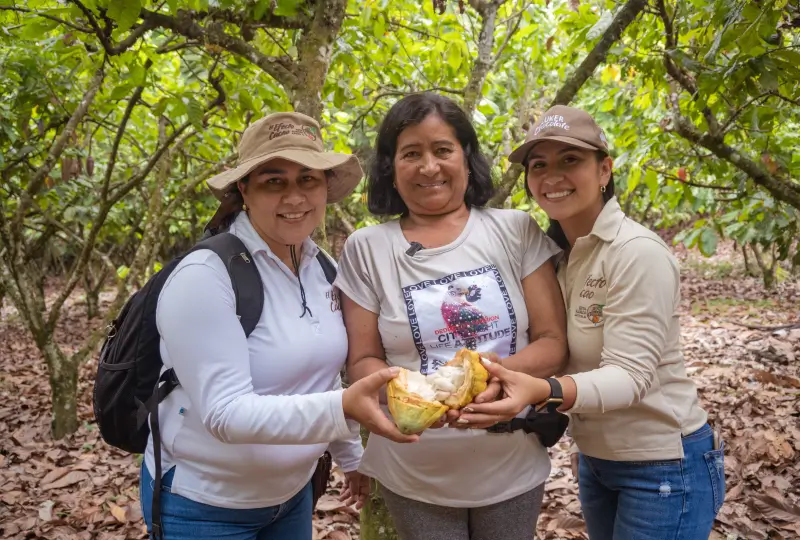
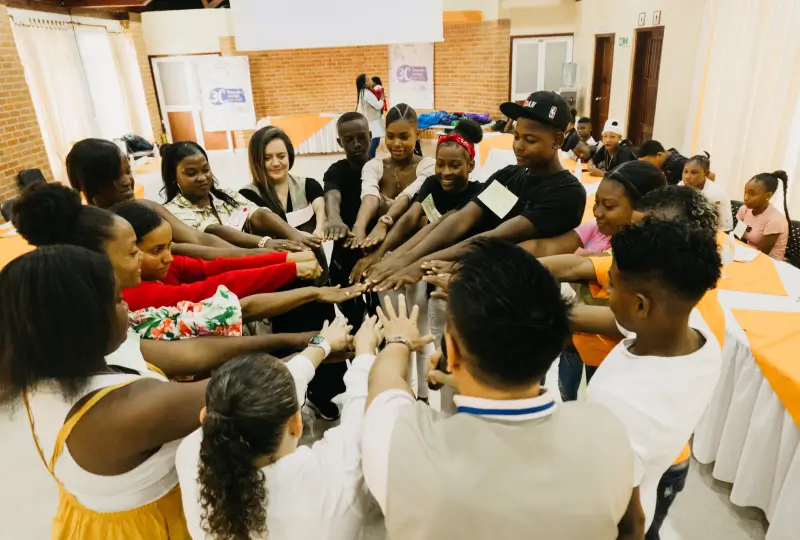


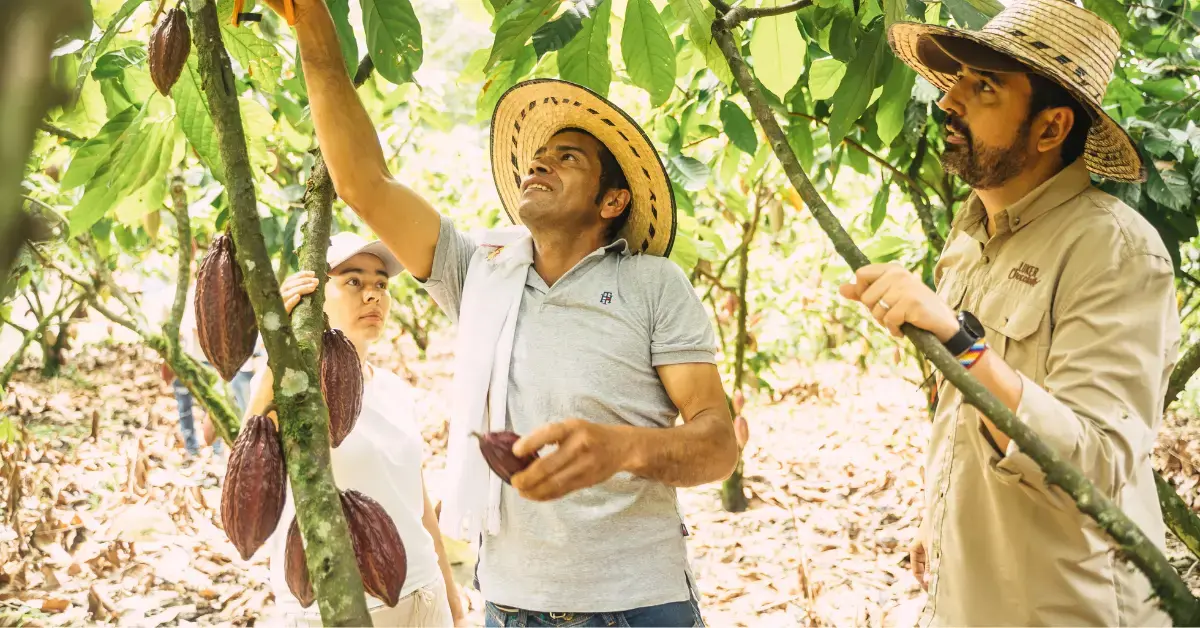

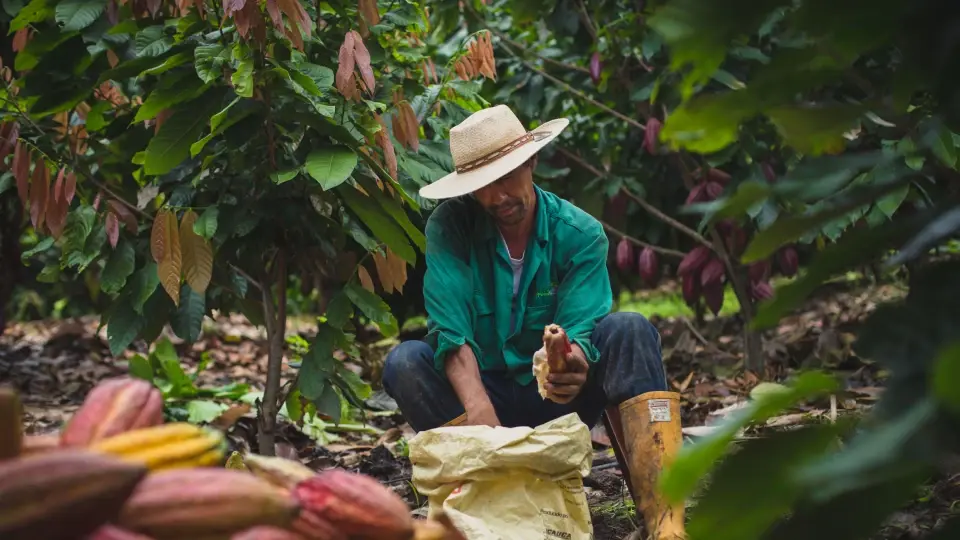
Luker Chocolate’s mission has always been to help brands and companies create purpose-driven products and drive well-being across the cocoa value chain.
Becoming a B Corp certified chocolate manufacturer reinforces that commitment. For Luker Chocolate, this certification recognises a way of doing business that balances economic growth with social and environmental impact, while maintaining a strong connection with cocoa origin, farming communities and our customers.
Today, as we move through our recertification process, this commitment is more relevant than ever. Recertification allows us to review what we have learned, strengthen our practices and continue using business as a force for good. It also helps us show more clearly how we create shared value in Colombia and across the chocolate value chain.
For brands looking for a long-term partner, working with a B Corp certified chocolate manufacturer means choosing a supplier that understands sustainability as part of the business, not as an additional message. At Luker Chocolate, this is reflected in our commitment to sustainable chocolate sourcing, product innovation and long-term relationships with producers, customers and partners.
What is a Certified B Corporation and why does it matter in chocolate?
A Certified B Corporation is a for-profit company evaluated for its social and environmental performance. The certification reviews how a company operates, how it makes decisions and how it creates impact for workers, customers, communities, suppliers and the environment.
To achieve the certification, companies must demonstrate high standards in three areas:
-
High social and environmental performance
-
Legal accountability to all stakeholders
-
Transparency around performance measured against B Lab standards
In the chocolate industry, this certification has a special meaning. Cocoa is connected to territories, farmers, biodiversity, traceability and rural development. For this reason, being B Corp certified helps demonstrate that chocolate can be part of a more responsible, transparent and well-being-driven value chain.
The 5 B Corp impact areas across the cocoa chain
| Area | What B Lab evaluates | How it shows up in the chocolate supply chain |
|---|---|---|
| Governance | Mission, ethics, transparency and formal commitment to all stakeholders | Decisions that go beyond profitability and consider producers, communities and customers |
| Workers | Labour conditions, well-being, development and fairness within the organisation | Teams working under equitable practices with real opportunities to grow |
| Community | Impact on territories, suppliers and populations in vulnerable situations | Direct relationships with cocoa-growing families, rural development and shared value at origin |
| Environment | Resource use, emissions reduction, biodiversity and responsible practices | Sustainable sourcing, climate action and protection of the ecosystems where cocoa grows |
| Customers | Transparency, traceability and real value for those who buy | Brands supported by a verifiable origin story, evidence of impact and responsible sourcing |
Why did Luker become B Corp certified?

Luker Chocolate became B Corp certified to reaffirm a commitment that has always been part of our story: using business as a force for good and creating shared value across the cocoa value chain.
Overall, CasaLuker, our parent organisation, received 92.8 points from B Lab, the non-profit organisation that certifies companies after they meet or exceed the rigorous B Impact Assessment criteria.
Beyond evaluating our operational practices, B Lab reviewed our impact models for poverty mitigation in the supply chain and the hiring of vulnerable populations, including people with low incomes, people with education up to high school level, young people in their first job and migrants. These measures help narrow the employment access gap while creating opportunities for skill development and access to technical and professional education.
B Lab also highlighted our Sanitation and Toxin Reduction Model, based on the inclusion of products such as organic cocoa and organic cleaning products, to measure, mitigate and offset greenhouse gas emissions.
Overall, the assessment helped us focus on the areas we needed to strengthen to achieve certification. It has also enabled us to make improvements to our internal processes, with more still to come.
As Julia Ocampo, Sustainability Director at Luker Chocolate, shared:
“This certification recognises the work we’re already doing and the responsible sourcing practices we have in place. We’re excited to continue raising the standards for our industry and aligning people and the planet with profit.”
What B Corp certification means for Luker Chocolate
For Luker Chocolate, being B Corp certified means working under a triple-impact approach: economic, social and environmental.
This means looking beyond the final chocolate product. It means asking how cocoa is produced, how farming communities are strengthened, how the environment is protected and how we support our customers in creating products with purpose.
The certification also validates practices that are part of our identity, such as responsible sourcing, transparency across the value chain, investment in cocoa-growing communities and the creation of shared value at origin.
This way of working is connected to our B4B chocolate model, which goes beyond a traditional supplier-customer relationship. At Luker Chocolate, we seek to partner, innovate and evolve with brands, creating solutions that respond to their business goals and to the expectations of a more conscious industry.
What was the B Corp certification process like for Luker Chocolate?

Since our founding in 1906, we have made substantial contributions to the sustainable development of rural communities in Colombia, transforming the cocoa value chain from its origin.
To begin the certification process, Luker Chocolate aligned its operations with a triple-impact approach focused on raising farmer income, promoting social well-being in cocoa-producing areas and nurturing the environment. We also work to create shared value at origin, keeping more value within Colombia and investing directly back into local communities.
The audit process required evidence, documentation and explanations of our efforts. The assessment covered five key impact areas:
-
Governance
-
Workers
-
Community
-
Environment
-
Customers
We were pleased to score most highly in governance. This area assesses a company’s overall mission, social and environmental engagement, ethics, transparency and ability to consider all stakeholders in decision-making formally.
This process was not only about obtaining a certification. It also helped us identify opportunities for improvement, strengthen internal processes and make the impact we seek to generate in the cocoa value chain more visible.
Why Luker Chocolate is working on B Corp recertification
B Corp certification is not an endpoint. It is a process that requires review, evidence and continuous improvement.
That is why recertification is an opportunity to review what has changed since the initial certification, what we have learned and how we can continue raising our standards. It also allows us to better document our progress in sustainability, responsible sourcing, governance, traceability and social impact.
For Luker Chocolate, recertification confirms that being a B Corp is not only about meeting an assessment. It is about maintaining a way of working that connects purpose, business and measurable results.
This process is also aligned with our cocoa sourcing work, where we collaborate with producers and partners to strengthen a more responsible, transparent and origin-connected supply chain.
What Luker Chocolate has learned as a B Corp certified company
Being B Corp certified has brought important learnings.
The first is that impact must be managed with the same discipline as quality, innovation and business performance. To create real change, data, monitoring, evidence and continuous improvement are essential.
The second learning is that sustainability must be embedded into the business model. It cannot be treated as a separate area or a message apart from operations. It needs to influence how we source cocoa, develop products, work with communities and support our customers.
The third learning is that collaboration is essential. Transforming the cocoa value chain requires the participation of farmers, customers, local organisations, technical teams, partners and communities. No company can transform a value chain alone.
These learnings strengthen the way we work and connect directly with initiatives such as The Chocolate Dream, a platform created to support and transform the cocoa industry in Colombia, building a more meaningful, sustainable and positive future for farming communities and the wider chocolate industry.
Andrea Camacho’s vision on sustainability, cocoa and social impact

Andrea Camacho, Sustainability Director at Casa Luker, brings an important perspective to this process because she connects B Corp certification with a broader conversation about sustainability, collaboration and transformation in agriculture.
In different spaces focused on social sustainability, Andrea has highlighted that impact is not built through isolated actions. It is built by connecting the company, producers, customers, communities and partners around shared goals.
One of the initiatives she has highlighted is The Chocolate Dream, Casa Luker’s collaborative plan to transform the cocoa value chain from origin. This initiative works across three main areas: increasing income for cocoa-growing families, strengthening social well-being through education and rural entrepreneurship, and protecting the environment through actions related to biodiversity, water, forests and decarbonisation.
Andrea has also spoken about the Dreamers Club, an initiative that allows Luker Chocolate customers to become directly involved in impact projects in cocoa-growing territories. Through this space, the relationship with customers goes beyond the product and becomes an opportunity to co-create value with communities.
This vision reinforces a key idea for Luker Chocolate: the future of cocoa will depend on more traceable, collaborative and transparent supply chains. It also confirms that B Corp recertification is an opportunity to keep learning, improve our practices and demonstrate how business can contribute to the well-being of people and the planet.
How B Corp certification connects with The Chocolate Dream
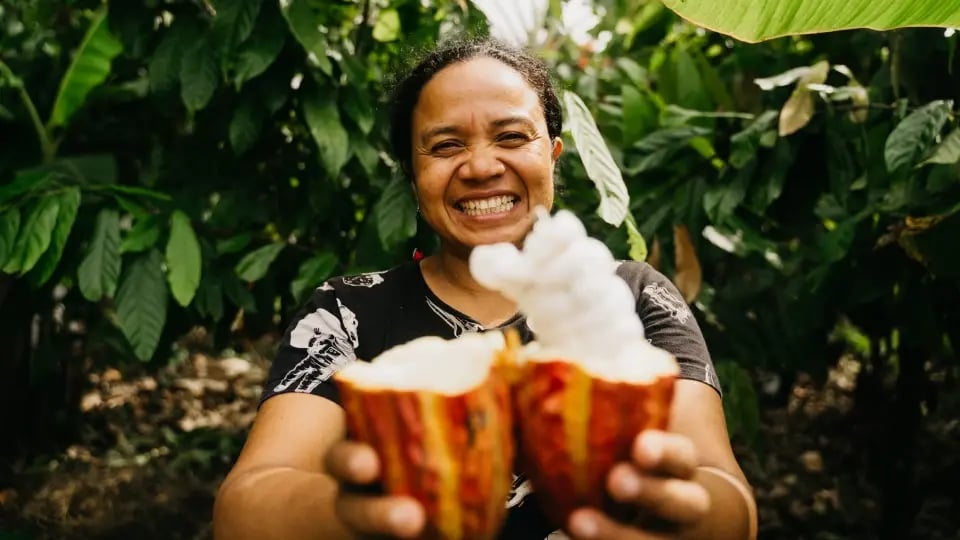
B Corp certification is directly connected to the way Luker Chocolate works across the cocoa value chain.
Through The Chocolate Dream, we seek to generate well-being in cocoa-growing communities, increase income, strengthen local capabilities and protect the environment. This initiative reflects our commitment to a more sustainable, collaborative and long-term cocoa industry.
The goal is to create value at origin. This means keeping more value in Colombia, investing in local communities and strengthening long-term relationships with the people who are part of the cocoa chain.
For our customers, this approach also brings a stronger origin story. Brands developing purpose-driven chocolate products need supply chains that can support their promises with evidence, traceability and real impact.
What does B Corp certification mean for Luker’s future sustainability practices?
Our commitment to transparency and sustainability extends beyond measuring ourselves against rigorous B Corp standards.
As showcased in our Sustainability Progress work, we continue making progress in farmer empowerment, environmental stewardship and responsible sourcing. These priorities are part of how we work with producers, customers, partners and communities to strengthen the cocoa value chain.
The Chocolate Dream, launched in 2018, has been a key initiative to support and transform the cocoa farming industry in Colombia. With the goal of creating a significant, sustainable and positive future for cocoa farming communities and the wider chocolate industry, we can continue delivering products that align with the high standards and ethics of our customers.
This commitment also connects with our work on climate action in cocoa and carbon emissions reduction, understanding that the environmental impact of chocolate must be managed with responsibility, measurement and continuous improvement.
Why brands should work with a B Corp certified chocolate manufacturer
For food, confectionery and chocolate brands, working with a B Corp certified chocolate manufacturer can strengthen sustainability strategies, responsible sourcing and differentiation.
A B Corp supplier can help support impact narratives, sustainability claims, ESG reporting and purpose-led brand strategies. This is especially relevant for companies looking to differentiate in premium, better-for-you, clean-label or sustainable chocolate categories.
At Luker Chocolate, we support brands from product development through to production at scale. Our approach combines technical experience, cocoa expertise, flexibility and a sustainability vision rooted in origin.
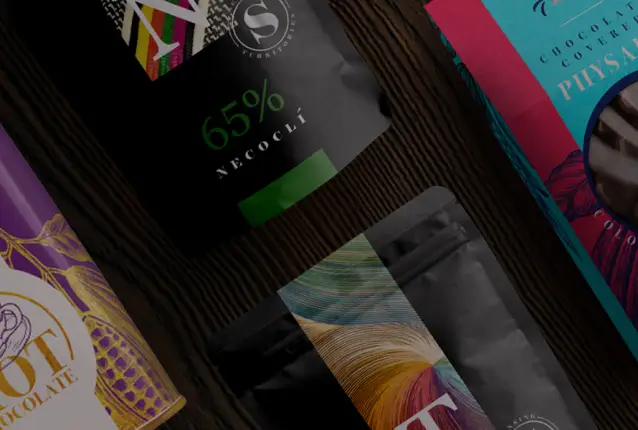
For companies looking for products ready to launch, our private label chocolate solutions help develop proposals aligned with each brand’s goals and with the expectations of more conscious consumers.
How sustainability supports chocolate product innovation
Sustainability is also connected to innovation. Brands developing products with purpose need supply chains that support the promise behind the product.
Chocolate with functional ingredients, reduced sugar, clean-label positioning or premium value can gain stronger credibility when supported by a clear story of origin, responsible sourcing and community impact.
That is why working with a sustainable chocolate manufacturer can add value to both the product and the brand. Sustainability stops being an additional message and becomes part of the central proposition: what is produced, how it is produced and who it is produced with.
This approach is especially relevant for brands exploring products aligned with new consumer preferences, such as chocolate with functional ingredients, no added sugar chocolate or more transparent and responsible chocolate lines.
How Luker Chocolate works towards a more sustainable cocoa chain
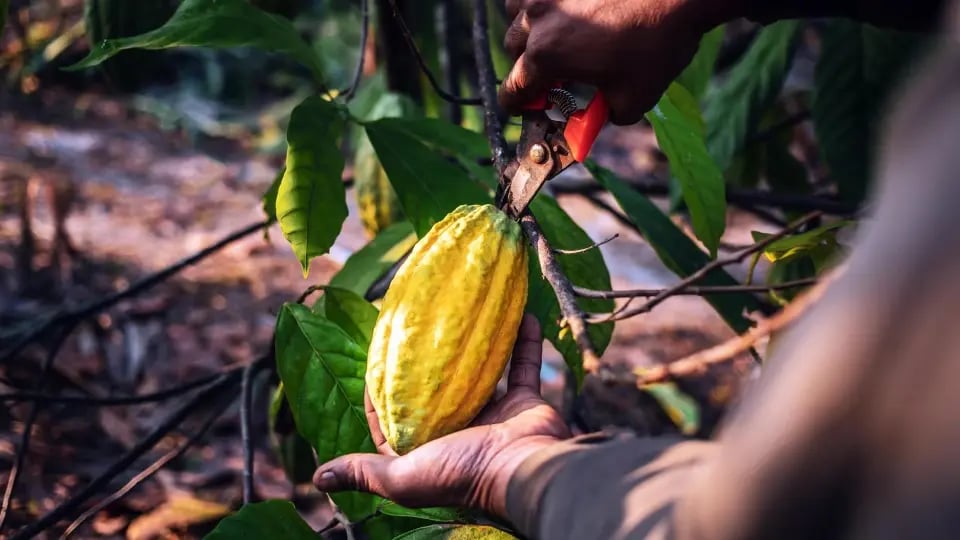
The cocoa chain faces social and environmental challenges that require collective action. That is why Luker Chocolate’s commitment to sustainability goes beyond certification.
We work to strengthen the well-being of cocoa-growing communities, promote responsible sourcing practices, protect ecosystems and contribute to a more resilient operation in the face of climate change.
Our climate action in cocoa strategy seeks to respond to these challenges from origin, with actions that help reduce climate risks and promote more sustainable practices across the chain.
We also work on carbon emissions reduction, understanding that the environmental impact of chocolate must be managed with measurement, responsibility and continuous improvement.
Committed to making a true difference in the cocoa value chain
We have always been proud of our achievements and progress towards becoming one of the world’s leading companies in positive social and environmental impact.
B Corp certification provides international recognition and reinforces our high standards in environmental responsibility, social impact and transparency. More importantly, it invites us to keep using our knowledge and experience to improve and impact all stakeholders, creating shared value across the full cocoa chain.
We would like to express our gratitude to everyone who supported the implementation and development of actions during the audit process, and to those who contributed evidence from various departments.
We are all responsible for our future, so let us create as much positive change in the world as possible.
To learn more about our initiatives, visit our sustainability at Luker Chocolate section.