




 New Product Development
 Custom Chocolate Formulations
 Quality Assurance
 Turnkey Chocolate Manufacturing
 Production at Scale
 Private Label
 Bakery and Pastry Solutions
 Organic Chocolate
 Upcycled Cocoa Products









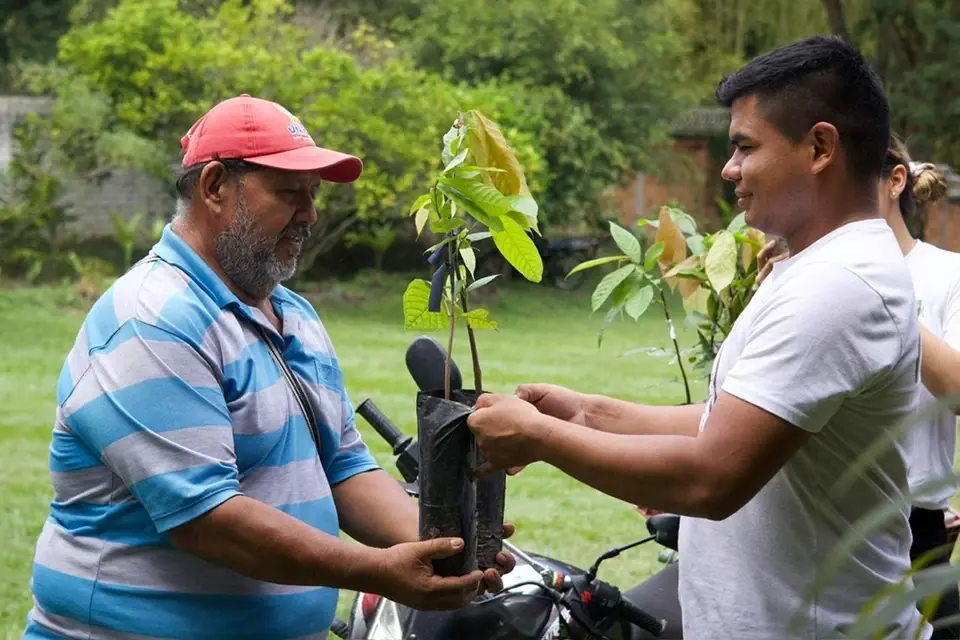
In a volatile market, sustainable cocoa sourcing shapes far more than your ingredient supply. It influences traceability, regulatory compliance, supply chain resilience and the sustainability claims you can confidently support. Long before chocolate reaches production, sourcing decisions determine the visibility, consistency and long-term reliability of your cocoa supply chain.
Why Does Sustainable Cocoa Sourcing Matter?
Because it decides four things before your product reaches a shelf: your traceability and EUDR compliance, your resilience to price and supply volatility, the credibility of the sustainability claims you can make, and the consistency of your ingredients. Sourcing is a brand decision, not only a procurement one.
For many food manufacturers, cocoa sourcing is often reduced to procurement metrics: price, volume, and delivery timelines. Yet the sourcing model behind those metrics determines much more than ingredient availability. It shapes traceability, supply resilience, sustainability performance, and the confidence behind every claim.
This is the part of sustainable cocoa sourcing that often goes unnoticed because it is structural rather than visible. It does not appear on a wrapper or in a tasting note. Yet, it determines whether your supply chain is resilient, your sustainability claims are credible, and your ingredients remain consistent over time.
Most Cocoa Emissions Occur at Origin, Not in Manufacturing
~96% of emissions sit beyond the factory
In one Colombian fine-flavour manufacturer's 2025 inventory, around 96% of emissions were Scope 3 and roughly 80% sat in agriculture — at origin. In other words, most of the environmental impact of chocolate ingredients is determined at origin, long before manufacturing begins. That is why sustainable cocoa sourcing plays such a critical role in reducing environmental impact and building more resilient supply chains.
What You Will Learn
- Why sustainable cocoa sourcing goes beyond procurement
- How traceability and EUDR compliance strengthen your cocoa supply chain
- How long-term sourcing relationships improve supply chain resilience
- Why transparent price transfer strengthens sustainability claims
- How origin and farming practices influence ingredient quality and carbon footprint
- Key questions to evaluate your sustainable cocoa sourcing strategy
1. Why sustainable cocoa sourcing goes beyond procurement
Sustainable cocoa sourcing is about far more than securing a reliable supply of cocoa. It shapes traceability and EUDR compliance, strengthens resilience to price and supply volatility, supports sustainability claims backed by evidence, and helps ensure consistent ingredient quality. These decisions begin at origin, making sourcing a strategic driver of a resilient and transparent cocoa supply chain.
For many food manufacturers, cocoa sourcing is often evaluated through procurement metrics such as price, volume and delivery timelines. While these factors matter, the sourcing model behind them determines much more than ingredient availability. It influences visibility across the supply chain, readiness for evolving regulations, long-term supply resilience, and the ability to substantiate sustainability claims with credible data.
This is one of the most important aspects of sustainable cocoa sourcing, yet it often goes unnoticed because it is structural rather than visible. It is built through sourcing relationships, traceability systems, and long-term collaboration at the origin. Together, these elements help create resilient supply chains, maintain ingredient consistency, and support long-term business value.
Relationship-based model, by the numbers (2024/25)
|
15,000+ cacao farmers across Colombia |
84 farmer associations |
73 regional buyers |


Luker works with this network directly — the structure that makes farm-level visibility and traceability possible in the first place.
Download our 2024/2025 Sustainability Report
💡Key insight:
The shorter and more direct your cocoa supply chain, the greater your visibility—and the stronger your ability to verify sustainability claims. Farm-level traceability is the foundation of sustainable cocoa sourcing and every sustainability commitment that follows.
Actionable Tips 👇
- Map every step between your business and the farm where your cocoa is grown.
- Ask whether your supplier can provide farm-level traceability, not just regional traceability or certification.
- Treat sustainable cocoa sourcing as part of your supply chain and risk strategy—not just a procurement decision.
2. How sustainable cocoa sourcing supports traceability and EUDR compliance
The EU Deforestation Regulation (EUDR) has redefined what traceability means across the cocoa supply chain. For cocoa entering the European Union (EU), sourcing must be deforestation-free, legally compliant, geolocated to the plot of production, and supported by a due diligence statement. Certification alone is no longer enough. Farm-level geolocation and verifiable documentation have become essential to demonstrate compliance.
As regulatory expectations evolve, sustainable cocoa sourcing provides the transparency and traceability needed to help manufacturers meet compliance requirements with confidence. More than a sustainability initiative, traceability has become an essential capability for building resilient and transparent supply chains.
Achieving this level of traceability is far more practical within a direct sourcing model than in a fragmented supply chain. In October 2024, all Luker exports to the EU became deforestation-free compliant, supported by complete documentation. Today, more than 63% of exported cocoa is covered by farm-level traceability, reaching 100% for cocoa destined for the EU.
These results are possible because traceability is built into Luker's sourcing approach from the very beginning—not added later to meet regulatory requirements. Close relationships with cocoa-growing communities and teams working directly at origin create the visibility needed to respond to evolving regulations while extending traceability beyond environmental criteria to include important social considerations, such as the prevention of forced and child labour.
💡Key insight:
Traceability today means more than certification. It requires farm-level geolocation, due diligence documentation and a sourcing approach that provides visibility from origin. Sustainable cocoa sourcing creates the visibility needed to make it possible.
Actionable Tips 👇
- Assess your supplier's readiness to meet EUDR requirements, even as implementation timelines continue to evolve.
- Ask for farm-level geolocation and due diligence documentation, not just regional traceability or certification.
- Evaluate whether your supplier's traceability system covers both environmental and social criteria, including the prevention of forced and child labour.
3. How long-term sourcing relationships strengthen supply chain resilience
The past year tested every link in the cocoa supply chain. Extreme price volatility, currency fluctuations and changing trade conditions made supply continuity—not just ingredient cost—the defining challenge for many food manufacturers. In this environment, resilient supply chains are built through long-term sourcing relationships, diversified sourcing strategies, and the ability to adapt to changing market conditions.
These approaches do not eliminate volatility, but they help absorb its impact. At Luker, long-term relationships with cocoa-growing communities, together with teams working directly at origin, provide the visibility and collaboration needed to respond more effectively to market disruption. As one example, Luker transitioned its international price reference from New York to London (ICE Futures Europe) on 1 July 2025 to work from a more tariff-neutral benchmark, while maintaining unchanged payment conditions for the cocoa-growing communities it works with. Together with daily pricing across nine warehouses and approximately 40 differentiated cocoa references, these capabilities help create greater continuity and reliability across the supply chain.
Building a resilient supply chain requires balancing multiple priorities. Cost, sustainability, and supply continuity do not always move in the same direction, and strengthening one often requires investment in another. The most resilient sourcing strategies recognize these trade-offs and make them intentionally, creating long-term value through stronger sourcing relationships, greater traceability and more reliable ingredient supply.
|
Priority |
What it protects |
What it can cost |
|
Lowest unit price |
Short-term margin |
Visibility, continuity and claim-readiness |
|
Supply stability |
Continuity through volatility |
Some flexibility on price and origin |
|
Traceability & sustainability |
Compliance and defensible claims |
Investment, time, and closer collaboration |
💡Key insight:
Supply chain resilience is built before disruption happens. Long-term sourcing relationships, close collaboration at origin and diversified sourcing strategies create the stability needed to navigate market volatility.
Actionable Tips 👇
- Ask how your supplier builds resilience through long-term sourcing relationships, diversified sourcing strategies and close relationships with cocoa-growing communities—not price alone.
- Evaluate supply continuity alongside ingredient cost when selecting a sourcing partner.
- Balance sustainability, cost, and supply continuity by defining which priorities matter most to your business.
4. Why transparent price transfer strengthens sustainability claims
As expectations for transparency continue to grow, the difference between a sustainability story and a substantiated claim has never been more important. Sustainability claims are only as credible as the evidence behind them. Transparent price transfer—the documented share of the market price that moves through the supply chain to suppliers and ultimately to farmers—helps turn sustainability commitments into evidence-based claims.
At Luker, we work towards an average of 90% of the London cocoa price being paid to our suppliers. Teams working directly at the origin document every purchase and verify that associations, in turn, transfer an average of around 90% of that value to farmers. This level of transparency supports due diligence, strengthens relationships across the supply chain, and provides the evidence needed to substantiate sustainability claims.
Rather than relying on assumptions, transparent price transfer creates accountability through documented payment flows. The result is greater confidence in sustainability claims and stronger foundations for long-term sourcing relationships.
💡Key insight:
Transparency turns sustainability commitments into claims backed by evidence. When payment flows and sourcing practices are documented and verifiable, they strengthen due diligence and build confidence across the supply chain.
Actionable Tips 👇
- Ask your supplier how price transfer is documented and verified throughout the supply chain.
- Request evidence of transparent price transfer, due diligence documentation and social criteria—not just general assurances.
- Ensure your sustainability communications are supported by verifiable data from your sourcing partner.
5. How origin and farming practices shape ingredient quality and carbon footprint
Sustainable cocoa sourcing is not only about compliance and supply chain resilience—it also shapes ingredient quality. Farming practices such as regenerative agriculture, careful post-harvest processing and region-specific genetics influence flavour, consistency and carbon footprint. Rather than competing priorities, quality and sustainability are often built through the same decisions made at origin.
Colombian fine-flavour cocoa provides a strong example. Based on farm-level measurements, smallholder cocoa in Colombia has shown a weighted average of approximately 3.6 kg CO₂e per kilogram of cocoa, with emissions as low as 2.5 kg CO₂e on one of Luker's farms. This compares with commonly used global database averages of around 10.8 kg CO₂e, largely due to lower land-use change emissions. Because cocoa is the primary contributor to chocolate's carbon footprint, sourcing decisions directly influence both environmental performance and ingredient quality.
This is where regenerative agriculture creates value beyond sustainability. At Luker, initiatives such as Colombia's first regenerative cocoa certification, launched with an initial cohort of 80 producers, together with the development of biofertilisers that help reduce agricultural emissions, demonstrate how farming practices at origin contribute to ingredient consistency, flavour development and lower carbon emissions over time.
💡Key insight:
Ingredient quality begins at origin. Farming practices influence flavour, consistency and carbon footprint, making sustainable cocoa sourcing a quality decision as much as a sustainability one.
Actionable Tips 👇
- Align ingredient quality and sensory expectations with origin, farming practices and post-harvest processes—not only with formulation.
- Ask how farming practices contribute to long-term ingredient consistency, quality and environmental performance.
- Use verified carbon footprint data alongside traceability to strengthen sustainability claims with evidence.
6. A checklist to evaluate your sustainable cocoa sourcing strategy
| How many steps separate your business from the farm where your cocoa is grown? |
| Can your supplier provide farm-level traceability supported by geolocation? |
| Is your cocoa supply chain prepared to meet EUDR requirements with documented due diligence? |
| Does your supplier's traceability system include both environmental and social criteria? |
| How is price transfer documented and verified throughout the supply chain? |
| How does your supplier build resilience against price volatility and supply disruptions? |
| How do origin and farming practices influence ingredient quality and carbon footprint? |
| Can every sustainability claim be supported by verifiable evidence? |
Reducing sustainable cocoa sourcing to the price of an ingredient overlooks where the greatest value is created. The sourcing approach behind that price shapes traceability, regulatory compliance, supply chain resilience, ingredient quality and the credibility of sustainability claims. When these decisions are made early, they become a long-term advantage that strengthens both supply security and business performance.
Sourcing Well Is a Shared Commitment
Resilient and transparent supply chains are built over time through close relationships with cocoa-growing communities and teams working directly at origin. They are not created when a sustainability claim is needed—they are the result of consistent sourcing decisions, collaboration and long-term commitment.
Luker partners with food manufacturers to develop traceable, deforestation-free Colombian cocoa ingredients supported by long-term sourcing relationships and transparent supply chains. Whether your priorities are sustainability, ingredient quality, or regulatory readiness, our team can help you build a sourcing strategy aligned with your business goals.